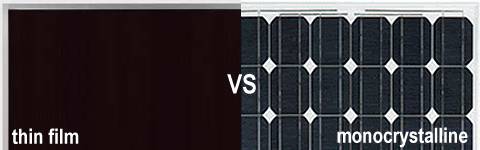
They are solid black without the normal silicon cell outlines you see on the face of a crystalline solar panel.
Solar panel amorphous vs crystalline.
Polycrystalline solar panels generally have lower efficiencies than monocrystalline options but their advantage is a lower price point.
Here are the instructions how to enable javascript in your web browser.
The down side to amorphous systems is the amount of real estate needed to mount the panels.
Amorphous silicon a si has been used as a photovoltaic solar cell material for devices which require very little power such as pocket calculators because their lower performance compared to conventional crystalline silicon c si solar cells is more than offset by their simplified and lower cost of deposition onto a substrate.
Particularly in home solar power grid connect systems and how they affect the life of a solar panel.
Amorphous offers the benefit of operating in lower light conditions and hence is suitable for many applications that are used in lighting since it will be able to put some charge into a battery at a lower light level than crystalline solar panels.
In all our grid connect packages we only use good quality poly or monocrystalline panels except in very specific circumstances for the.
For full functionality of this site it is necessary to enable javascript.
Usually thin film solar panels are lightweight and flexible making them easy to install.
In the case of monocrystalline in a semi flexible form factor these are usually the bridge before taking the step into amorphous solar panels they are lighter than polycrystalline panels come and less expensive than amorphous panels.
Amorphous cells are constructed from a fine layer of silicon which enables solar panels to be more flexible and therefore lightweight.
In addition polycrystalline solar panels tend to have a blue hue instead of the black hue of monocrystalline panels.
Amorphous cells can withstand higher temperatures without output being affected compared to poly or mono crystalline cells.
Amorphous solar panels offer around a 7 efficiency rate while mono and poly crystalline panels have efficiency ratings of anywhere from 14 to 20.
Quite often we re asked about the advantages of monocrystalline panels and polycrystalline solar modules over their amorphous thin film counterparts.
Before we get to amorphous panels let me tell you how annoyed i become when i see these videos slamming amorphous panels for being so costly.
Amorphous is lower cost than crystalline although it s less efficient in converting sunlight to energy and as a result requires a larger panel to deliver the same power as a smaller crystalline panel.
Attempts to raise the efficiency of amorphous panels by stacking several layers each in tune to different wavelengths of light has proven somewhat effective but the overall efficiency of these types of thin film panels is low compared to other options.