2 12 pitch or lower low slope or nearly flat.
Soffit follows roof pitch.
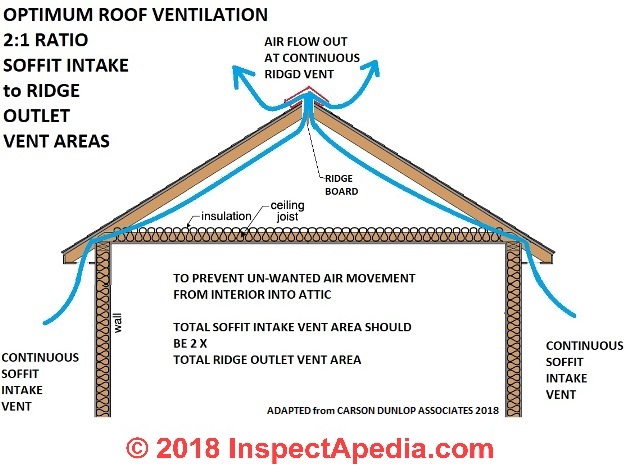
Of course there should be intake vents to ensure a balanced system.
Figure 7 mechanical ventilation used with a hip roof.
That first number is what changes but stays within a range.
The top fascia to under soffit measurement is from top of fascia under roof sheeting to the bottom side of the soffit sheeting.
They come from each side of the roof and meet in the middle to form what looks like a v.
The wall top to rafter bottom measurement is from top of wall vertically down to a point level with the bottom outside edge of the rafter not including fascia.
Up to 6 12 roof pitch use the standard formula as explained in this article.
Drawing a superimposes the common rafters for the two roof pitches and illustrates the problem that occurs when roof layout starts at the outside edge of the exterior walls.
There s no correct way to finish rake lower edges.
The second number run is always going to be 12.
In this article we stick to the basics which follows this logic.
They are generally made of two by four lumber and are used to form the pitch of a roof.
To ensure proper ventilation calculate the correct number of soffit vents for your home.
The most common parameter is to maintain an equal ridge height over building sections with differing spans.
This ceiling can make a porch feel larger add drama to the space and keep your porch cool in hotter climates.
When a pitch value is shown it will appear as 2 12 which would indicate a nearly flat roof or 18 12 very steep.
For example six inches up for every 12 inches across.
Rakes are always miter joined at the ridge of your roof.
The calculated soffit drop is the measurement from top of wall vertically down to the underside of soffit sheeting.
7 12 to 10 12 roof pitches increase the amount of ventilation by 20 percent.
Another by product of this roof configuration is varying soffit heights and widths which require further design decisions.
One method is to use a powered attic vent with a humidistat thermostat located close to the ridge or top of the roof.
Where roofs of unequal pitch join it requires careful layout to create equalwidth soffits with equal height fascias.
For projects involving vents with motors the calculation formula is different.
11 12 roof pitch and higher increase the amount of ventilation by 30 percent.
To maintain a consistant ridge height in these situations the roof pitch must be adjusted.
And in many of these cases the hip roof forms a large volumetric attic space to ventilate.
Rake boards follow or parallel your roof pitch.
A vaulted ceiling follows the roof pitch with finishing materials applied to the rafters.